phmacao Probability in Casino Games
phmacao: Mastering Probability in Casino Games for Filipino Players
Welcome to phmacao, your premier destination for understanding the fascinating world of casino gaming, especially for our players in the Philippines. In the thrilling realm of online casinos, luck often seems to be the sole determinant of success. However, behind every spin of the roulette wheel, every dealt card in blackjack, and every slot machine reel, lies the fundamental principle of probability. For seasoned players and newcomers alike, grasping the basics of probability is not just an academic exercise; it's a strategic tool that can significantly enhance your gaming experience and potentially improve your outcomes. This article delves into how probability works in various casino games, offering insights into different game types, comparing strategies, and providing practical tips for making more informed decisions. We'll explore how understanding these mathematical underpinnings can empower you to play smarter, manage your bankroll more effectively, and ultimately, get more enjoyment out of your time at the virtual tables and slots at phmacao.
Are you ready to elevate your game? Join phmacao today and put your new knowledge to the test!
Table of Contents
Introduction to Probability in Casino Games
Probability is the mathematical measure of the likelihood of an event occurring. In the context of casino games, it helps us understand the chances of winning or losing. Every casino game, whether it's a card game, a dice game, or a slot machine, operates on specific probabilities. While these probabilities are designed to give the casino an inherent advantage – known as the house edge – understanding them allows players to make more rational decisions, rather than relying solely on intuition or superstition. For example, knowing the probability of drawing a certain card in blackjack can inform your decision to hit or stand. Similarly, understanding the odds of a specific number hitting in roulette can guide your betting strategy. At phmacao, we believe that an informed player is a better player, and that's why we emphasize the importance of understanding these fundamental concepts. This knowledge doesn't guarantee a win every time, but it certainly equips you with a clearer picture of the risks and potential rewards involved in each wager.
Understanding House Edge and Return to Player (RTP)
Two crucial concepts directly related to probability in casino games are the House Edge and Return to Player (RTP). The House Edge is the casino's built-in advantage, expressed as a percentage of the player's initial bet. It represents the average gross profit the casino expects to make from each wager over the long term. For instance, if a game has a 2% house edge, the casino expects to keep 2 centavos for every peso wagered. The higher the house edge, the less favorable the game is for the player over time.
Conversely, Return to Player (RTP) is the percentage of all wagered money that a slot machine or casino game will pay back to players over time. If a slot machine has an RTP of 96%, it means that, on average, for every ₱100 wagered, the machine will pay back ₱96 to players, keeping ₱4 as the house edge. RTP is particularly relevant for slot games and other electronic gaming machines. Players at phmacao often look for games with higher RTPs, as these theoretically offer better long-term returns. Understanding these figures is vital for choosing games that offer a better balance between entertainment and potential payout.
Knowing the house edge and RTP for different games allows you to make strategic choices about where to place your bets. For example, some table games like blackjack (with optimal strategy) can have a house edge of less than 1%, while others like keno might have a house edge exceeding 25%. This knowledge empowers you to select games that align with your risk tolerance and playing style.
Probability in Table Games: Blackjack vs. Roulette
Table games offer a rich ground for applying probability. Let's compare two popular options: Blackjack and Roulette.
Blackjack: A Game of Skill and Probability
Blackjack is often lauded as a game where skill can significantly influence outcomes, primarily because of the element of probability. Players make decisions (hit, stand, double down, split) based on their hand and the dealer's upcard. The probability of busting (going over 21) changes with each card drawn. For instance, if you have a hand of 16 and the dealer shows a 10, the probability of drawing a card that busts you is high. Optimal blackjack strategy charts are entirely based on probability, guiding players to make the mathematically correct decision in every scenario. By consistently following these strategies, players can reduce the house edge to less than 1%, making it one of the most favorable casino games. This is why many players at phmacao enjoy blackjack – it rewards strategic thinking.
Roulette: Pure Chance, Defined Probabilities
In contrast, Roulette is a game of pure chance, but its probabilities are clearly defined. A standard European roulette wheel has 37 pockets (numbers 1-36 plus a single zero), while an American wheel has 38 pockets (1-36 plus a single zero and a double zero). This seemingly small difference significantly impacts the probabilities and thus the house edge.
- European Roulette: The probability of hitting a specific number is 1/37. The house edge for most bets is approximately 2.7%.
- American Roulette: The probability of hitting a specific number is 1/38. The house edge for most bets is approximately 5.26% due to the extra double zero.
Even money bets (like Red/Black, Odd/Even, High/Low) have nearly a 50% chance of winning (18/37 for European, 18/38 for American). While no strategy can alter the inherent probabilities in roulette, understanding these differences allows players to choose the variant with better odds (European over American) and to place bets with known expected values. For those who love the thrill of the spin, phmacao offers both versions, encouraging players to choose wisely.
Probability in Slots and Arcade Games
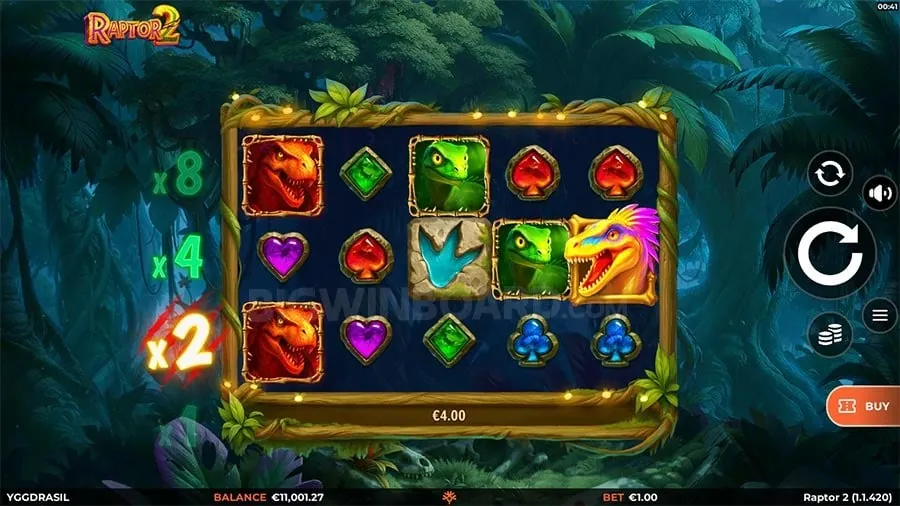
While table games often involve visible elements that allow for probability calculations, slot machines and arcade games operate differently. The probabilities in these games are determined by a Random Number Generator (RNG), a sophisticated computer program that ensures each spin or game outcome is entirely random and independent of previous results.
Slot Machines: RNG and Volatility
For slot machines, the probability of hitting a winning combination or a jackpot is pre-programmed into the RNG. This probability, combined with the payout structure, determines the game's RTP. Players cannot influence the outcome of a spin, as each spin is an independent event. However, understanding concepts like volatility (or variance) can be beneficial. High-volatility slots pay out less frequently but offer larger wins, while low-volatility slots pay out more often but with smaller amounts. This choice depends on a player's bankroll and risk appetite. At phmacao, our extensive selection of slots includes a variety of volatilities, catering to every type of player.
Arcade Games: Skill vs. Chance
Arcade games in casinos often blend elements of skill with underlying probabilities. While a player's dexterity or strategic choices might influence their performance, the game's payout mechanism is still governed by programmed odds. For example, in a fishing game, your aim and timing might be crucial, but the probability of catching a high-value fish or triggering a bonus round is determined by the game's design. Understanding that even in skill-based arcade games, a house edge exists and probabilities are at play, helps players manage their expectations and enjoy the entertainment value without unrealistic expectations of guaranteed wins. Explore our exciting arcade games at phmacao!
Strategies for Applying Probability in Your Gameplay
While probability doesn't guarantee a win, it certainly informs smarter gameplay. Here are some strategies to consider:
- Choose Games with Lower House Edge/Higher RTP: As discussed, games like Blackjack (with optimal strategy) and European Roulette generally offer better odds than American Roulette or Keno. Always check the RTP for slot games.
- Master Basic Strategy in Skill-Based Games: For games like Blackjack and Video Poker, learning and consistently applying basic strategy is paramount. These strategies are derived directly from probability calculations and minimize the house edge.
- Understand Bet Probabilities: In games like Craps or Roulette, different bets have different probabilities and payouts. While higher payout bets often have lower probabilities, understanding these trade-offs helps you make informed choices.
- Bankroll Management: Probability tells us that losses are inevitable in the short term. Effective bankroll management, setting limits, and sticking to them, is crucial for sustained play and enjoyment. Don't chase losses; understand that the probabilities will eventually play out.
- Avoid "Sucker Bets": Some bets in casino games offer significantly worse odds than others (e.g., the "Any Seven" bet in Craps). Probability helps identify and avoid these bets.
By integrating these probability-based strategies into your gaming at phmacao, you transition from a purely hopeful player to a more strategic one, increasing your chances of a more rewarding experience.
Common Misconceptions and Pitfalls
Despite the mathematical clarity of probability, several misconceptions often lead players astray:
- The Gambler's Fallacy: This is the mistaken belief that if an event has occurred more frequently than normal in the past, it is less likely to happen in the future (or vice-versa). For example, if red has hit ten times in a row on roulette, some might think black is